Hardwired vs Plug in EV Charger
EV Charging, Electrical Installation
Hardwired vs Plug in EV Charger
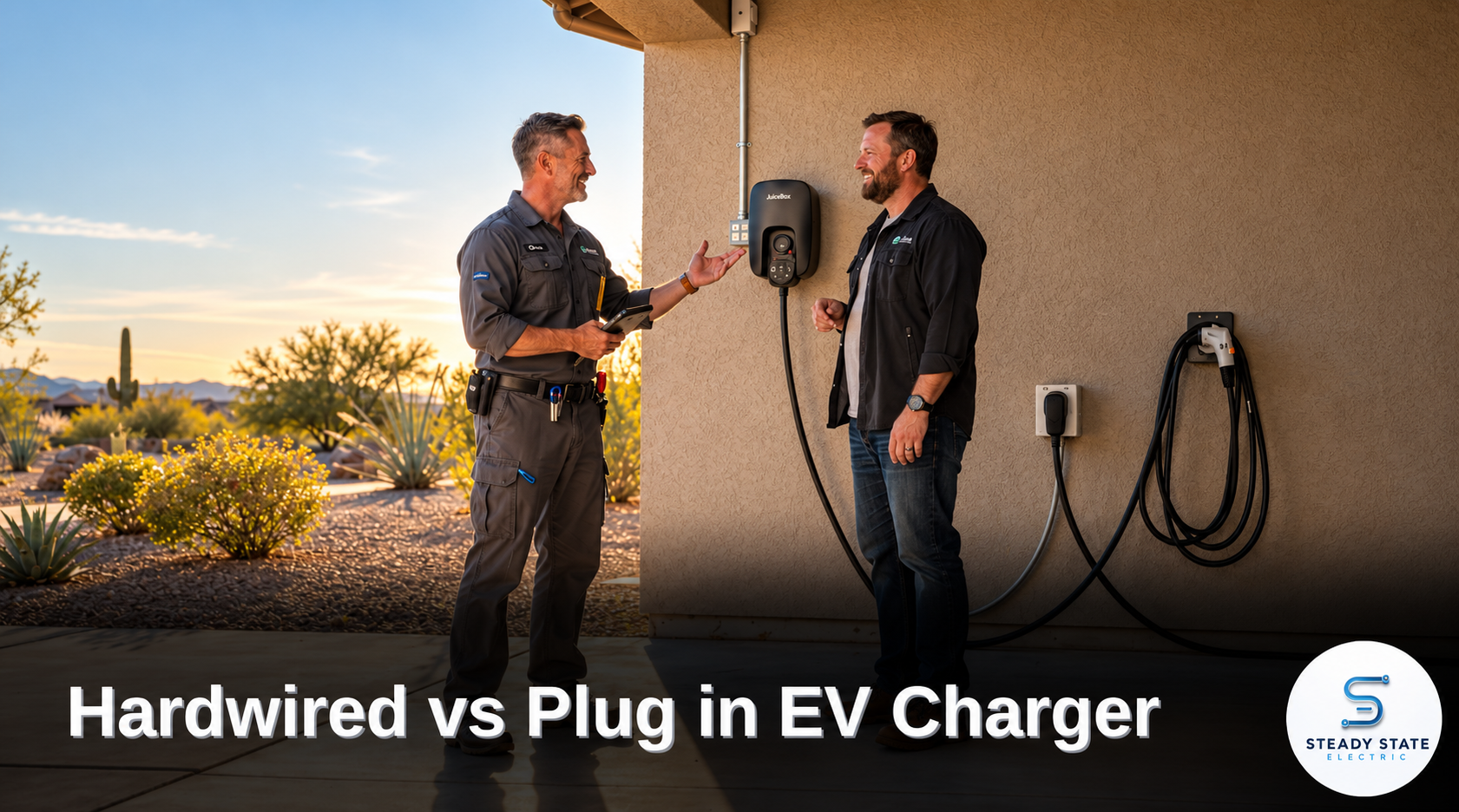
When it comes to hardwired vs plug-in EV chargers, hardwired chargers deliver safer, more reliable performance in Arizona's extreme heat, eliminating plug degradation risks that NEMA 14-50 outlets face above 110°F. Steady State Electric recommends hardwired installations for Arizona homeowners seeking faster, code-compliant charging without connector wear or fire hazards common in the state's high-temperature climate.
Hardwired chargers deliver code-compliant, continuous Level 2 charging without a plug-and-receptacle connection that can loosen or scorch under Arizona's summer heat. NEMA 14-50 outlets are convenient, but continuous EV charging loads are documented causes of scorched faceplates. Our licensed East Valley electricians recommend hardwiring for safer, more reliable daily charging.
Hardwired connections deliver consistent charging speeds for Tesla, Rivian, Ford, and Chevy EVs even during Arizona's extreme summer heat, since fixed wiring reduces connection points prone to heat-related resistance. NEMA 14-50 outlets offer flexibility but generate more heat at the plug under sustained high-amperage loads. Steady State Electric, licensed and bonded across Maricopa and North Pinal Counties, installs code-compliant hardwired chargers built for Gilbert and Queen Creek summers.
What Separates Hardwired From Plug-In EV Chargers?
Charging capacity, weather resistance, and code requirements separate the two installation methods, not just personal preference. Both approaches deliver dependable Level 2 charging when a licensed electrician handles the work correctly. The gap between them shows up over years of daily charging, especially across Arizona's triple-digit summers.
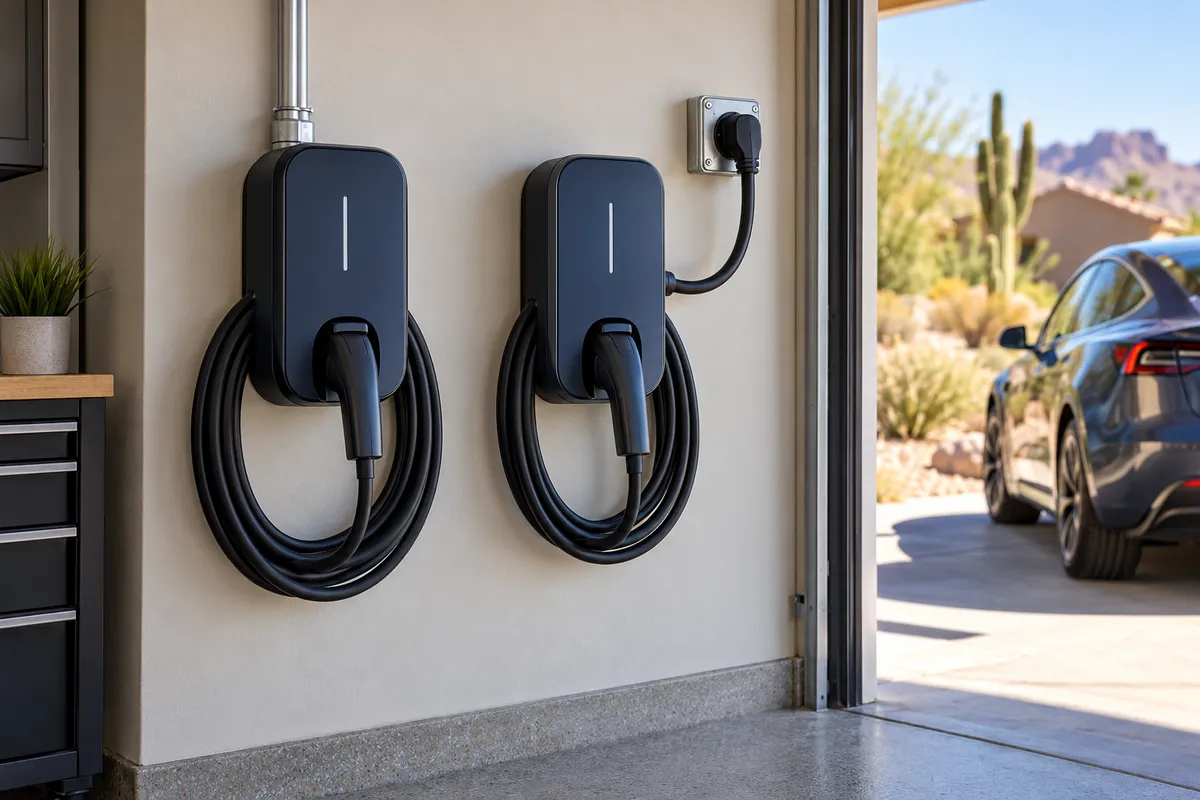
A hardwired vs plug-in EV charger decision starts with how the unit connects to the home's electrical system. A hardwired charger wires directly into a dedicated branch circuit, with no plug or receptacle sitting between the wiring and the charging equipment. A plug-in setup instead relies on a heavy-duty outlet, most commonly a NEMA 14-50 EV outlet homeowners may already recognize from RV or welding use.
Either configuration runs on 240 volts, the same voltage that powers a home's dryer or oven circuit. The difference lies in what happens around that circuit day after day.
Does the connection type affect Level 2 EV charger amps East Valley homes can actually use?
Yes. Circuit design, not just the charger itself, determines the amperage available for safe Level 2 EV charging. Steady State Electric evaluates each home's panel capacity before recommending hardwired or plug-in setups, ensuring the choice supports steady charging speed for years without straining the electrical system.
Why Does Arizona Heat Raise the Stakes?
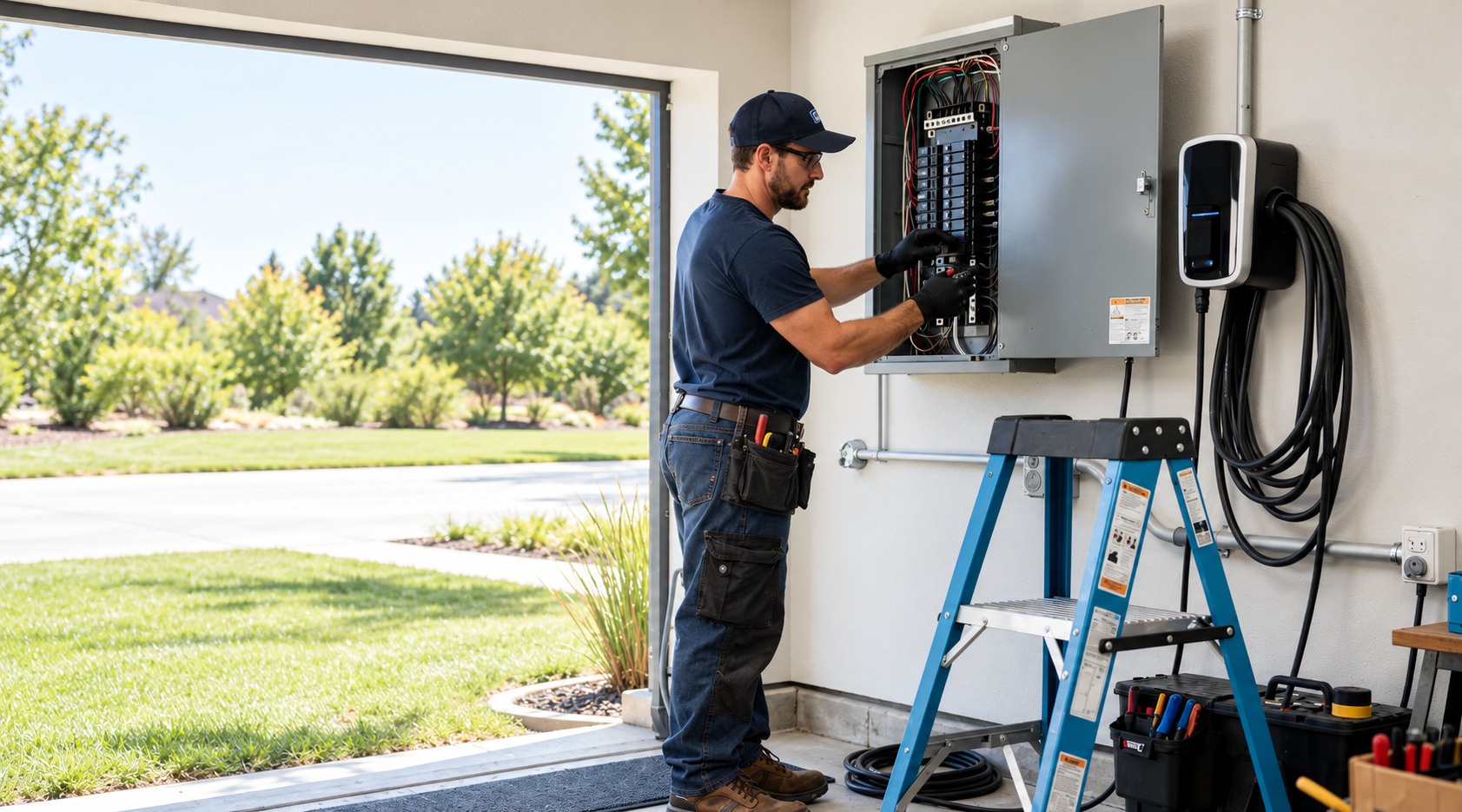
Extreme summer temperatures across Gilbert, Queen Creek, and the greater East Valley turn a marginal outlet installation into a real fire risk. Continuous EV charging loads already push residential circuits hard. NEMA 14-50 receptacles failing under that kind of sustained draw rank among the most documented electrical hazards seen in homes today. This danger is not a hypothetical scenario dreamed up to sell equipment. Documented failures show scorched faceplates, melted prongs, and charred drywall hidden behind the outlet box, damage that often goes unnoticed until an inspection or a remodel uncovers it.
Plug-in and hardwired setups serve the same purpose but differ significantly in safety and reliability under extreme conditions. The gap between them shows up in one specific, costly way: plug-in outlets burning up under prolonged load, particularly once desert heat pushes ambient temperatures well past what the receptacle was designed to handle year-round.
Is a NEMA 14-50 outlet unsafe for EV charging?
A properly rated NEMA 14-50 EV outlet can function safely under normal conditions, but risks increase with prolonged high-temperature use. The risk climbs when the outlet faces daily, hours-long charging sessions in triple-digit heat, since repeated thermal cycling stresses the connection points that plug-in equipment relies on.
For homeowners weighing a hardwired vs plug-in EV charger decision, the honest answer leans hardwired, and the reasoning holds true across Arizona's East Valley and beyond. A direct-wired connection eliminates the failure-prone plug-interface entirely.
Choosing the right setup also means understanding how much amperage homes can safely support for Level 2 EV charging. Higher amperage under continuous load is exactly where plug-in connections struggle most in Arizona's climate.
How Much Power Do East Valley EVs Actually Need?
A Level 2 charger draws power from a 240-volt circuit, the same type that runs an electric clothes dryer in most Arizona homes. Gilbert and Queen Creek homeowners charging a Tesla, Rivian, Ford, or Chevy EV need this circuit properly sized to the vehicle's onboard charger and the household's electrical panel capacity. Undersizing the circuit slows charging and stresses the wiring; oversizing wastes money on parts the vehicle never uses.
The Level 2 EV charger amperage homeowners should plan for depends on the vehicle and the charging method chosen. Two paths reach that 240-volt circuit:
Hardwired installation: wired directly into the panel, delivering steadier power, faster charging, and better protection against overload conditions.
Plug-in installation: uses a dedicated outlet, offering flexibility to unplug the charging equipment or move it to another property.
Both approaches, when sized correctly for the vehicle and the home's electrical load, deliver dependable, fast charging. The difference isn't reliability of concept — it's how much protection and performance each method offers over years of daily use in Arizona's heat.
Is a hardwired charger better for Gilbert homes than a plug-in outlet?
Hardwiring costs more upfront because the installation work is more involved, running conduit and connecting the charger directly to the panel. That extra step pays off with more efficient charging, faster charging speeds, and stronger protection for both the home's wiring and the vehicle's battery system.
What is a NEMA 14-50 EV outlet, and does Queen Creek need one?
A NEMA 14-50 EV outlet drivers might consider is a 240-volt receptacle that plug-in chargers connect to, similar to an outlet used for an electric range. Steady State Electric evaluates each home's panel and daily driving habits before recommending hardwired or plug-in service across the East Valley.
Which Setup Fits Gilbert and Queen Creek Driveways?
Garage layout and driving habits decide the answer more than brand preference. Homeowners weighing a hardwired vs plug-in EV charger installation should start with how the vehicle gets used day to day, not just sticker price. For most permanent home charging setups, a hardwired connection remains the preferred route, delivering steadier power and fewer moving parts to fail over years of daily use.
Plug-in setups still earn a place in certain Queen Creek driveways. A NEMA 14-50 EV outlet installation suits drivers who move between properties, tow trailers, or want the flexibility to unplug the charging equipment and take it along. Portability comes at a tradeoff: connectors, prongs, and receptacles absorb repeated stress that a hardwired unit never faces.
Phoenix-area homeowners shopping for a charger typically land on this same fork in the road. Both hardwired units and plug-in outlets charge the vehicle successfully. The difference shows up in long-term reliability, not in whether the car charges tonight.
Does driveway distance from the panel matter?
Longer cable runs between the electrical panel and the parking spot affect Level 2 EV charger installations differently depending on setup. Hardwired systems handle longer, higher-amperage runs with less voltage drop. Plug-in outlets work fine for shorter runs but need careful sizing to avoid strain under continuous charging loads.
Steady State Electric keeps a dedicated East Valley focus across Arizona, spanning Gilbert, Mesa, Chandler, Queen Creek, and San Tan Valley. Each driveway, panel location, and vehicle gets evaluated before recommending a setup built for the property instead of a one-size answer.
How Does Steady State Electric Install Your Charger?
Steady State Electric installs home EV charging systems for drivers across Gilbert, Queen Creek, and the greater East Valley, working as a licensed and bonded contractor throughout Maricopa and North Pinal counties. Every installation begins with an assessment of the home's electrical panel, load capacity, and garage layout before any equipment goes on the wall. Homeowners weighing a hardwired vs plug-in EV charger setup get a straightforward walkthrough of both paths, in plain terms, without pressure toward the pricier option.
The company's electricians handle EV charger installs alongside the panel upgrades, surge protection, and troubleshooting work that keeps Arizona homes running safely. That range of experience matters for desert properties, where summer heat and older panels can complicate a charging circuit. Licensed electricians on every job price the work fairly and complete it without unnecessary upsells. Queen Creek and Gilbert homeowners know what they're paying for upfront.
Does Steady State Electric Install NEMA 14-50 Outlets?
Yes. A licensed electrician can wire a NEMA 14-50 EV outlet homeowners use for portable Level 2 charging equipment, giving drivers flexibility to move chargers between vehicles or homes. The outlet gets sized and installed to match the vehicle's charging needs and the property's existing service capacity.
What Amperage Do East Valley Homes Need for Level 2 Charging?
Level 2 EV charger requirements vary by vehicle and panel capacity, so electricians evaluate each home individually. Considerations include:
Existing panel amperage and available breaker space
Distance from the panel to the garage or parking area
Charging speed the household actually needs day to day
Steady State Electric treats every garage and panel like they belong to the crew doing the work, arriving on schedule and standing behind the installation long after the last wire is connected.
Conclusion
In closing, choosing between hardwired and NEMA 14-50 EV chargers comes down to your home's electrical capacity, charging needs, and Arizona's demanding heat conditions. Both options deliver reliable charging when installed correctly by a licensed electrician who understands local code requirements and your property's specific setup. The right choice keeps your system safe, protects your investment, and ensures your vehicle charges efficiently for years to come. When you're ready to move forward, we're here to assess your home and deliver honest guidance without pressure.
