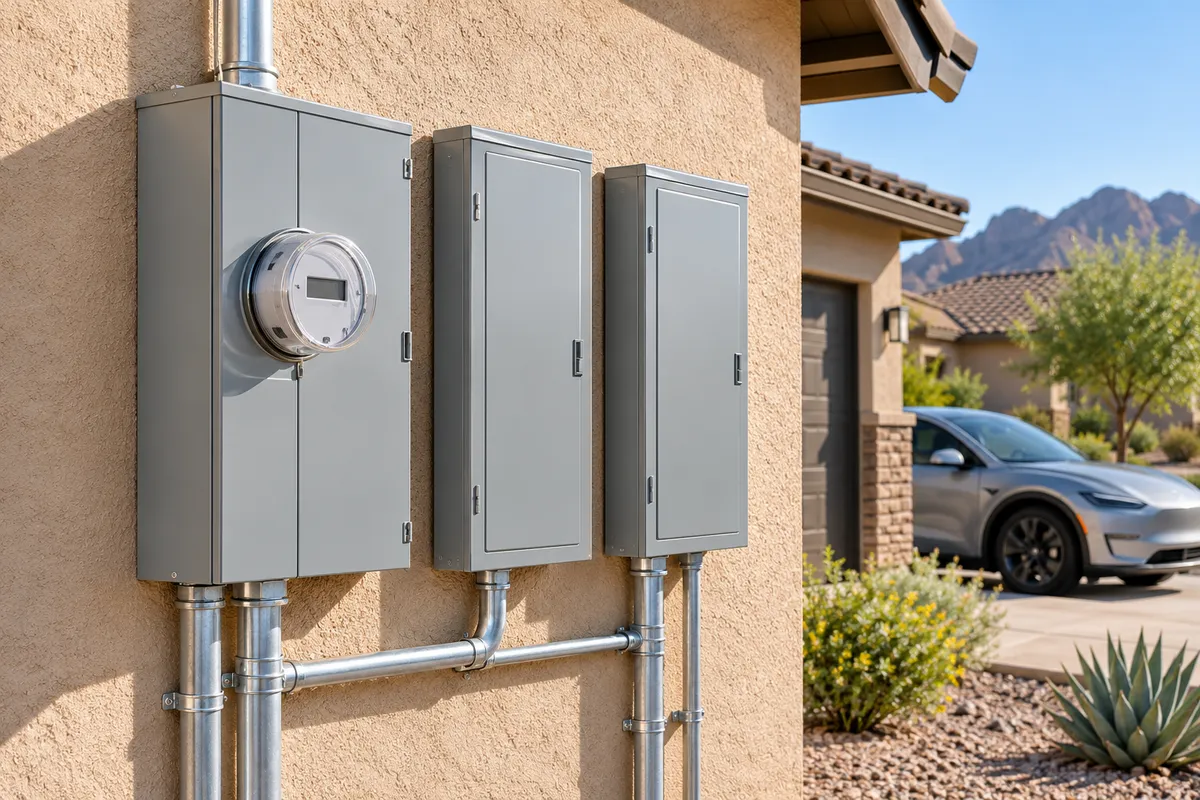
400-Amp Panel Upgrade Chandler AZ: What You Need in East Valley
Electrical, Panel Upgrades
400-Amp Panel Upgrade Chandler AZ: What You Need in East Valley
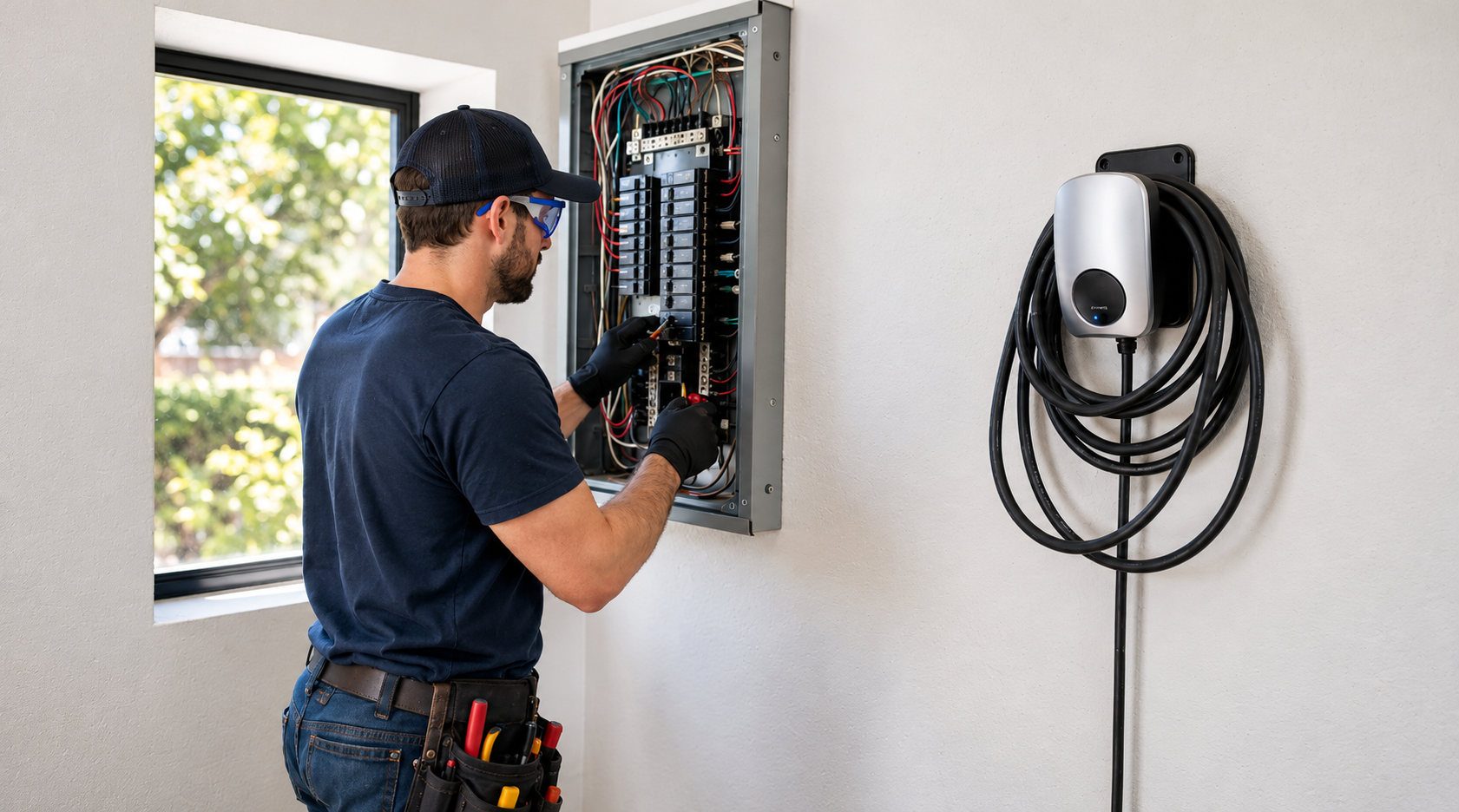
East Valley homeowners choosing between 200-amp and 400-amp panels should match capacity to real load: 400-amp service doubles a standard 200-amp panel's capacity, suiting all-electric homes, multiple EV chargers, or houses over 3,500 square feet. Steady State Electric evaluates Gilbert, Chandler, Mesa, Queen Creek, and San Tan Valley homes before recommending the appropriate service size.
Is Your East Valley Home Outgrowing Its 200-Amp Panel?
Older homes throughout Gilbert, Chandler, Mesa, Queen Creek, and San Tan Valley often carry 100 or 200-amp electrical service installed decades ago. That capacity once matched typical household demand, but modern living now outpaces it in many East Valley neighborhoods. Panels that felt generous ten years ago now strain against today's mix of appliances, electronics, and vehicle charging.
Several warning signs point to a service that needs a second look. Breakers that trip repeatedly signal a panel working past its comfortable limit, not a random inconvenience. Homeowners planning a kitchen remodel, a room addition, or a backyard casita should treat those projects as a natural trigger to reassess electrical capacity before construction begins.
What's driving higher power demand in East Valley homes?
East Valley households increasingly add electric vehicles, heat pump HVAC systems, solar arrays, and smart home technology to existing houses. Each addition pulls more continuous load from a panel that was never designed for that combination. Stacked together, these upgrades push many properties toward capacity limits faster than owners expect.
How does a professional determine if an upgrade is needed?
A proper electrical load calculation East Valley homeowners can rely on measures existing circuits against planned additions before any panel work starts. This calculation determines whether a home needs a 400-amp service upgrade to support a major expansion.
Common signs a 200-amp panel is falling behind:
Breakers trip during normal daily use, not just during storms
Renovation or addition plans are underway or being considered
New EV chargers, heat pumps, or solar batteries are on the horizon
The home mixes several high-draw systems at once
200-Amp vs 400-Amp: What's the Real Difference?
Electrical capacity separates these two service sizes. A 400-amp panel upgrade that homeowners in Chandler, AZ, choose doubles the home's electrical capacity compared to a standard 200-amp setup. That extra headroom matters most for East Valley households running heat pumps, multiple EV chargers, and growing smart-home systems that pull power around the clock.
Households in Gilbert, Mesa, Queen Creek, and San Tan Valley with heavier electrical loads gain the most from the larger service. A 400A system comfortably accommodates large loads like heat pumps and several EV chargers running at once. A 200A panel can strain under that same combination. Choosing between the two comes down to how much load the property actually carries, not just what's standard for the neighborhood.
Do I need a 400-amp panel for my East Valley home?
Load, not square footage alone, determines the answer. Homes planning multiple EV chargers, solar-plus-battery systems, or all-electric appliances typically outgrow a 200A panel faster than expected. An electrical load calculation East Valley technicians perform accounts for existing circuits plus planned additions before recommending either service size.
Is a service upgrade only for new construction?
No. While selecting the right amperage is a critical decision during major renovation or new-build projects, existing homes facing tripped breakers or planned upgrades benefit equally. A heavy-up electrical panel Gilbert homeowners request often addresses years of added appliances that outpaced the original service.
200A service: fits typical households with standard appliance loads
400A service: suited to heavier loads, multiple EV chargers, or heat pump systems
Load calculation: determines which size actually fits the property's demand
Do You Really Need a Heavy-Up in Gilbert or Chandler?
Not every East Valley home needs a bigger panel. A heavy-up electrical panel upgrade makes sense for specific load situations. Many properties run fine on their existing service. Steady State Electric evaluates each home individually rather than pushing a one-size-fits-all upgrade. Guesswork on amperage leads to overspending or, worse, an undersized panel that trips breakers under real-world demand.
Certain signals point toward more capacity. A home adding multiple electric vehicle chargers to a panel already running near its limit is a strong candidate for a 400-amp panel upgrade Chandler AZ homeowners increasingly request. Larger East Valley properties, especially those over 3,500 square feet with multiple HVAC systems cycling at once during summer heat, often need the extra headroom too. Plans to add solar panels, battery backup, or a whole-home generator also push many households toward 400-amp service.
Homes without these heavier loads frequently stay well within the limits of standard 200-amp service, even at a larger square footage. Determining which category a property falls into requires a proper electrical load calculation East Valley electricians can perform before any panel work begins.
Signs a 200-amp panel is likely still enough:
No workshop equipment, multiple EVs, or all-electric systems planned
No solar, battery, or generator integration on the horizon
Existing panel shows available capacity during peak usage
How does a load calculation decide the right panel size?
A load calculation adds up every circuit's demand, from HVAC and appliances to planned EV chargers or generators. Steady State Electric compares that total against existing panel capacity before recommending an upgrade. The result gives homeowners a clear, code-based answer instead of a guess.
How Does an Electrical Load Calculation Actually Work?
An electrical load calculation for East Valley homes adds up every circuit, appliance, and system a property runs, then compares that total against what the existing panel can safely deliver. Licensed electricians use this math to determine whether a home in Gilbert, Chandler, Mesa, Queen Creek, or San Tan Valley needs more capacity before adding new equipment. Steady State Electric performs this assessment as the first step of any upgrade conversation. Homeowners get a plan based on actual demand rather than guesswork.
Several factors push the calculated number higher in East Valley households:
Large square footage, typically homes over roughly 3,500 square feet, since more living space usually means more HVAC zones, outlets, and fixtures drawing power simultaneously.
Multiple electric vehicles charging at the same time, a growing reality as East Valley families add a second or third EV to the driveway.
Rising overall household consumption, as modern homes simply use more electricity than they did a decade ago.
Why Do Some Homes Get Sized for More Capacity Than They Need?
Oversizing has become an almost automatic habit in residential electrical work. Consumption has climbed steadily for years. Contractors often lean toward bigger equipment purely out of routine rather than a documented need. A proper load calculation avoids that guesswork by matching capacity to actual demand.
Does a Load Calculation Decide Whether a Home Needs a Heavy-Up?
Yes. A heavy-up electrical panel service in Gilbert and across the East Valley is only justified once the math confirms current wiring can't handle projected demand. This same process determines whether a 400-amp panel upgrade in Chandler, AZ makes sense or whether standard 200-amp service still has room to grow.
How Does Steady State Electric Handle Your Panel Upgrade?
Steady State Electric approaches every panel project with a licensed, bonded team focused specifically on East Valley homes. Coverage extends across Gilbert, Mesa, Chandler, Queen Creek, and San Tan Valley. Homeowners work with a crew that understands the region's growing power demands. A 400-amp panel upgrade requested by a homeowner in Chandler, AZ, follows the same disciplined process as a smaller heavy-up electrical panel job: careful planning before any wire gets touched.
Licensed electricians handle the physical work on every project, and each installation meets current code requirements. That standard protects both the immediate safety of the home and its long-term resale value. Nothing gets left to guesswork, especially on higher-capacity systems where mistakes carry real consequences.
What should homeowners expect before work starts?
Every project begins with an electrical load calculation East Valley homeowners can trust, followed by a clear, upfront price. No surprise charges appear at the end of the job, and no fees get added that weren't already discussed. This pricing approach removes the guessing game that often surrounds electrical work.
Why trust Steady State Electric with a panel upgrade?
The company was built on a straightforward idea: electrical work should be done correctly, explained in plain terms, and backed by people homeowners can trust inside their own homes. That philosophy shapes each step of a panel upgrade, from initial assessment through final inspection.
A typical project with Steady State Electric includes:
A load calculation that accounts for EV charging, HVAC systems, and future power needs
Code-compliant installation performed by licensed electricians
A transparent price quote before any work begins
Clear communication throughout the job, without technical jargon or pressure tactics
Conclusion
In closing, choosing between a 200-amp and 400-amp panel comes down to your home's current needs and future plans. East Valley homes benefit from honest guidance that weighs both options fairly—no pressure to upgrade beyond what makes sense for your situation. When you're ready to move forward, licensed electricians who treat your home with the same care they'd give their own will ensure the work is done right, safely, and to code.
